Buying in the mountains: what are the tax implications? How can you optimise your tax situation?
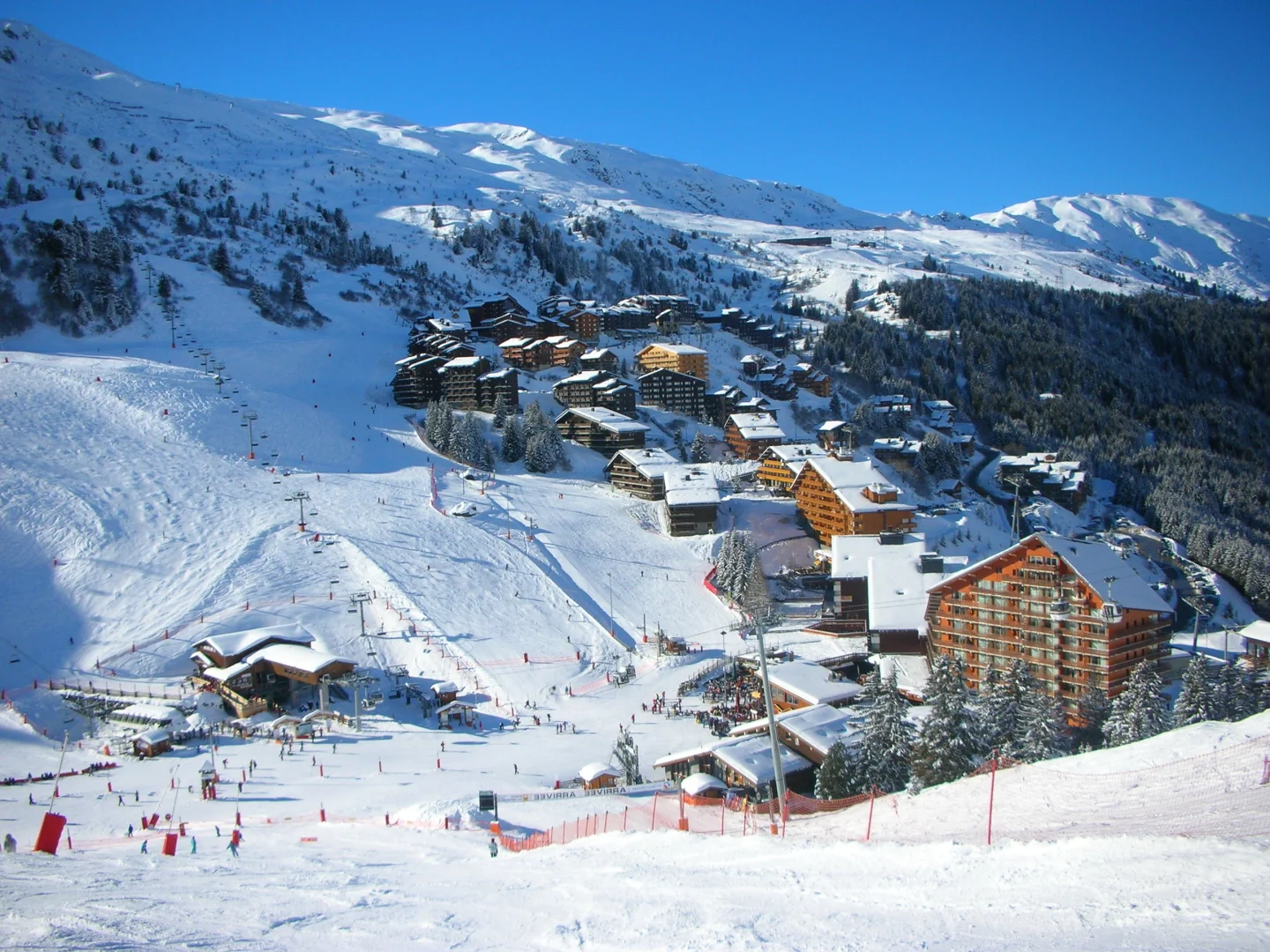
Investing in mountain property is much more than just a love affair with snow-capped peaks. It
is a formidable wealth management strategy that combines property appreciation, seasonal rental income and often little-known tax breaks. Between VAT recovery, LMNP (non-professional furnished rentals) status and tax exemption schemes, there are many levers to pull (but you need to know which ones to pull).
Resorts such as Méribel and Courchevel offer exceptional rental potential, with some of the highest winter occupancy rates in Europe. However, taxation in mountain areas is subject to specific rules that need to be understood before signing.
- Recovering 20% VAT on new properties, in tourist residences (RT) or on new developments outside RTs, can represent tens of thousands of euros in savings.
- The LMNP status allows you to generate low-tax rental income thanks to accounting depreciation.
- Several schemes can be combined, but there are pitfalls: tax reclassification, advance VAT refunds, thresholds not to be exceeded.
Whether you are looking for a pied-à-terre or a pure rental investment, you can consult our property catalogue in Méribel to make your project a reality.
What are the specific tax advantages of buying property in the mountains?
Buying property in the mountains gives you access to targeted tax schemes that are not always available in lowland or coastal areas. VAT recovery, municipal exemptions and specific zoning create a favourable environment for savvy investors.
However, you need to be familiar with these mechanisms in order to take advantage of them.
VAT recovery on new properties
The first and not least important lever is that purchasing a new property in a classified tourist residence or simply a home in a new development allows you to recover 20% VAT.
In concrete terms, on an apartment priced at €300,000 including VAT, you can recover €50,000 in VAT.
The condition? Sign a commercial lease of at least nine years with a management operator or a rental mandate with hotel-style services.
This is a huge advantage.
But beware: this recovery comes with the obligation to keep the property for at least 20 years. It is possible
to leave before the end of the 20 years, provided that the VAT is repaid. This is calculated on a pro rata basis for the remaining years.
Rural revitalisation zones (ZRR)
Certain mountain communities are classified as rural revitalisation zones.
This classification entitles them to significant tax exemptions: temporary exemption from income tax for businesses that set up there, and sometimes exemption from property tax for several years.
For an investor, this translates into a reduced tax burden in the early years (a significant boost when expenses start to mount up).
The Montagne II Act
Adopted in 2016, the Montagne II law strengthens the protection of mountain areas while facilitating investment.
It simplifies urban planning rules in certain areas and encourages the renovation of tourist properties.
For investors, this means renovation projects that are better regulated and sometimes eligible for specific subsidies.
Property tax exemptions
Several mountain municipalities grant property tax exemptions on new buildings, generally for two years.
Some go further with additional allowances for renovated housing or tourist residences.
Check directly with the town hall before buying: these benefits vary from one municipality to another.
How does the LMNP status work for a property in the mountains?
The Non-Professional Furnished Rental status remains one of the most attractive tax regimes for rental investments in the mountains.
It combines administrative simplicity with substantial tax advantages, provided that certain specific criteria are met.
Eligibility conditions for LMNP status in mountain areas
To benefit from LMNP status, your furnished rental income must remain below £23,000 per year and represent less than 50% of your total income.
Exceeding these two thresholds will result in you being classified as an LMP (Professional Furnished Landlord) with very different tax consequences.
The property must be rented furnished, with a minimum level of equipment as defined by Decree No. 2015-981 of 31 July 2015: bedding, hotplates, refrigerator, oven or microwave, crockery and utensils, tables and chairs, storage, lighting and cleaning equipment.
In ski resorts, this criterion is generally easy to meet, as seasonal rentals involve accommodation that is ready to move into.
The good news is that no registration in the commercial register is required.
A simple declaration of commencement of activity via the INPI's one-stop shop allows you to obtain a SIRET number.
The tax advantages of LMNP in the mountains
This is where LMNP status becomes really interesting.
Under the actual taxation regime, you can deduct all your actual expenses: loan interest, management fees, insurance, property tax, maintenance work, co-ownership charges, etc.
But the real advantage is depreciation.
You can depreciate the property over 20 to 40 years and the furniture over 7 to 10 years.
This accounting mechanism reduces (or even eliminates) your taxable income for many years.
Let's take a concrete example:
An apartment in Méribel purchased for €350,000 generates €18,000 in annual rent.
After deducting expenses (€6,000) and depreciation (approximately €9,000), the taxable income falls to €3,000. The
tax savings are considerable.
What if your expenses exceed your income? The deficit can be carried forward for 10 years, which protects your future rental income.
What are the specific features of the Pinel law in mountain areas?
The Pinel scheme offers a tax reduction of between 12% and 21% of the purchase price, depending on the length of the rental commitment chosen (6, 9 or 12 years).
However, its application in mountain areas is subject to zoning restrictions that limit its appeal in certain resorts.
Not all mountain communities are eligible. The
Pinel scheme mainly applies to zones B1 and B2, and even zone A for some large urban areas close to resorts. Communities classified as zone C (often the most rural villages) are excluded.
The rent caps imposed by the Pinel scheme pose a real problem in tourist resorts.
In Courchevel or Méribel, market rents far exceed the regulatory caps.
As a result, you rent below market price, which eats into your profitability.
The RT2020 standard applies to all new buildings eligible for the Pinel scheme.
At high altitudes, thermal constraints increase construction costs, but also guarantee better energy performance (a selling point for tenants who value comfort).
One last point to consider: the Pinel scheme requires year-round rentals, which prohibits seasonal rentals.
However, this is precisely the most profitable rental model in ski resorts.
For investors targeting seasonal income, the Pinel scheme is often not the right choice.
How can you optimise the tax treatment of a purchase in a tourist residence?
Tourist residences in mountain resorts offer a specific tax framework which, when used effectively, can significantly reduce your tax burden while generating regular rental income.
There are two main levers worth considering: VAT recovery and deductible expenses.
VAT recovery: how it works
To recover the 20% VAT on your new purchase, three conditions must be met:
- The property must be new or off-plan.
- You must sign a commercial lease of at least nine years with an operator or a rental mandate with hotel-style services.
- The services offered must include at least 3 out of 4 hotel-type services, namely: customer reception, provision of household linen, regular cleaning of the premises and provision of breakfast.
Refunds are generally made within 6 months of the request being submitted to the tax authorities.
However, bear in mind the 20-year commitment: any resale before this term triggers a proportional refund of the VAT recovered. This
calculation must be made before any decision to resell early.
Specific deductible expenses
In addition to standard expenses, tourist residences generate specific deductible costs. Rental
management fees paid to the operator often represent 15 to 25% of revenue (a significant expense but fully deductible).
Co-ownership charges, maintenance of common areas and facilities (swimming pool, spa, gym), comprehensive insurance and business interruption insurance: all of these reduce your taxable income. Renovation and upgrading work, which is common in ageing residences, is also deductible under the actual regime.
What are the tax pitfalls to avoid when buying in the mountains?
Investing in the mountains presents specific tax risks that many investors discover too late. A threshold
error, early exit or incomplete declaration can turn a good investment into an administrative nightmare.
The first major pitfall is reclassification as a professional furnished landlord (LMP).
If your furnished rental income exceeds £23,000 per year and represents more than 50% of your income, you automatically become a professional furnished landlord.
The consequences? A professional capital gains regime, social security contributions on profits, and the loss of certain LMNP benefits.
The second danger is early termination of the commercial lease.
Selling before the 20-year VAT commitment period requires you to repay a portion of the VAT you have recovered.
On a €400,000 property, the bill can run into tens of thousands of euros.
Third pitfall: undeclared seasonal rental income. The
tax authorities now cross-check data from rental platforms (Airbnb, Booking) with income tax returns.
Omission is rarely accidental in the eyes of the tax authorities.
Don't forget the impact of the property's status either.
A second home does not benefit from the same allowances as a main residence in the event of resale. Capital
gains are taxed on a sliding scale, with total exemption after 22 years for income tax and 30 years for social security contributions.
Finally, be wary of promises of guaranteed returns made by some developers.
These commitments sometimes mask artificially inflated rents that fall after the guarantee period. Dig
into the figures before signing.
To learn more about profitability, see our dedicated article: Investing in the mountains: who is it for and why?
How to choose the best tax structure for your project?
Analyse your current tax situation
Before choosing a scheme, lay the right foundations for your analysis.
What is your marginal tax rate? A taxpayer paying 30% tax does not benefit from a tax reduction in the same way as a taxpayer paying 41%.
Your debt capacity and personal contribution also determine the type of arrangement that is possible.
Clarify your objectives: are you looking to reduce your taxes immediately, generate additional income for retirement, or build up transferable assets?
FAQ - Everything you need to know about the tax implications of buying property in the mountains
Can you combine several tax exemption schemes for a purchase in the mountains?
Combining schemes is possible but subject to certain restrictions.
You can combine LMNP status with VAT recovery if the property is a tourist residence with a commercial lease or under mandate.
However, Pinel and LMNP are incompatible on the same property.
The overall cap on tax breaks of €10,000 per year also limits the benefits of combining schemes.
What is the tax difference between a seasonal rental and a year-round rental?
Seasonal rentals are classified as industrial and commercial profits (BIC) with a 50% allowance for micro-BIC, compared to 30% for traditional property income. There are also more actual deductible expenses
. Annual
rentals are classified as property income with a 30% allowance for micro-property.
The actual regime often favours seasonal rentals in mountain areas.
What is the tax impact of reselling a property under the LMNP scheme?
Under the LMNP scheme, capital gains are calculated according to the personal tax regime: sale price minus purchase price, without reintegration of depreciation. This is a considerable advantage. Total
exemption applies after 22 years for income tax and 30 years for social security contributions. If
you sell too early, the tax bill can be significant.
To find out more, see our analysis: is buying a flat in a ski resort a profitable investment?
Which ski resorts are the most attractive for investment?
The Trois Vallées resorts (Méribel, Courchevel, Val Thorens, Les Menuires) dominate the market thanks to their international reputation and extensive ski area.
Méribel offers a good balance between return and entry price, while Courchevel attracts an ultra-premium clientele with high property values.
More intimate resorts such as La Rosière and Châtel offer affordable prices with attractive potential for appreciation.
