What are property prices like in ski resorts ?
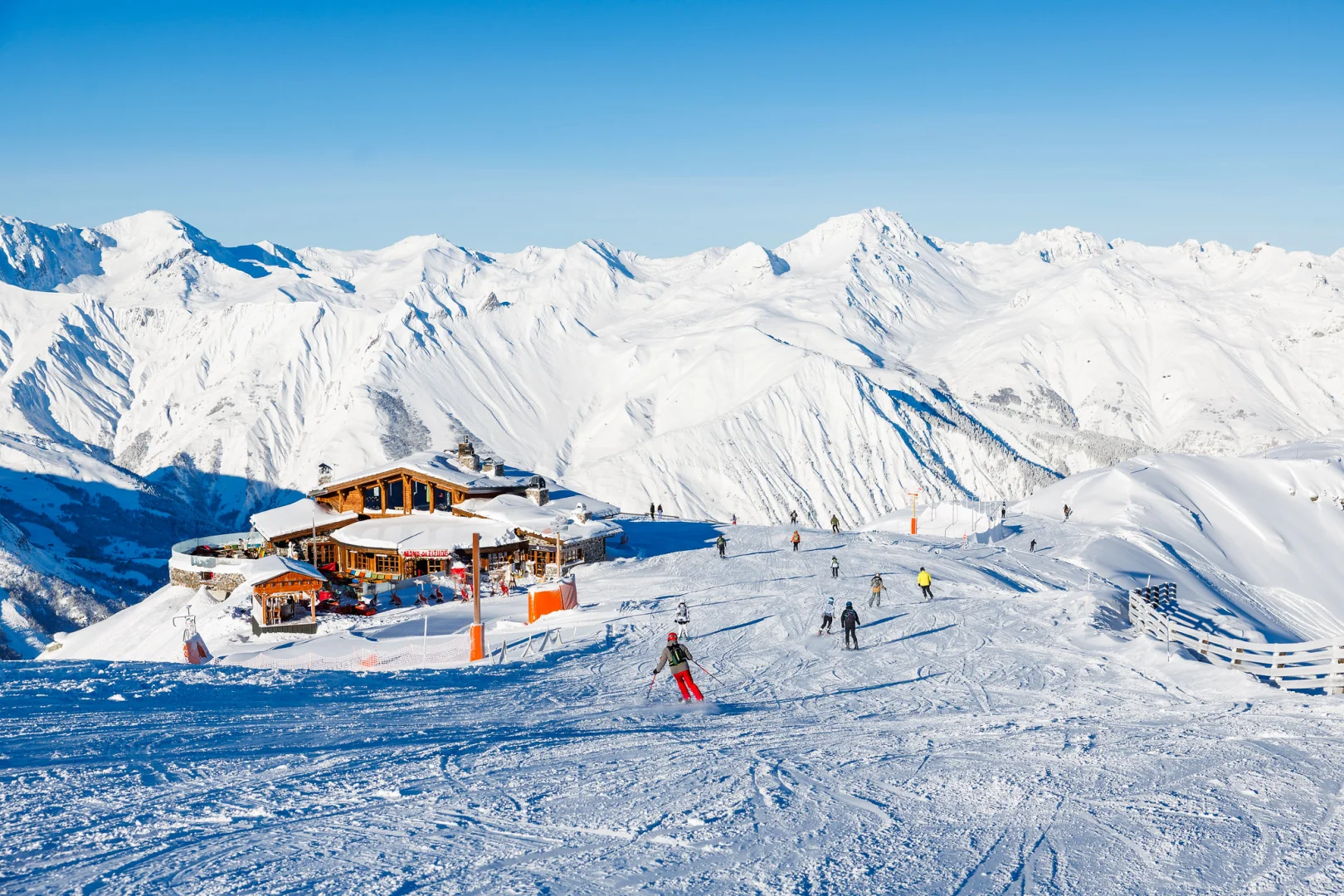
Property prices in French ski resorts have soared in recent years. By 2026, the gap will widen between prestigious high-altitude resorts such as Val d’Isère and Courchevel and the more accessible family resorts in the Pyrenees or the Massif Central.
Climate change is redrawing the map: resorts situated above 1,800 metres are seeing their value rise, whilst those at lower altitudes are struggling to attract investors.
Three key points to bear in mind before continuing:
- The average price in resorts stands at €3,800 per square metre, compared to €2,900 per square metre for the national average
- Val d’Isère tops the list at €13,997 per m², whilst some resorts in the Massif Central fall below €1,000 per m²
- 28% of properties in ski resorts are rated F or G, a major challenge for owners
What will the average property prices in ski resorts be in 2026?
Property prices in ski resorts are expected to average €3,800 per square metre in 2026, 31% higher than the French average of €2,900 per square metre. This figure masks very different realities depending on the type of property and location.
An apartment in a residential complex generally sells for between €3,000 and €5,000 per square metre in mid-sized resorts. Detached chalets, on the other hand, command much higher prices, sometimes two to three times the price per square metre of a comparable apartment in the same resort.
How are these prices calculated? Professionals base their calculations on recent transactions recorded by solicitors, adjusting for the exact location of the property (at the foot of the slopes or in the village), the resort’s altitude and the quality of its facilities. An extensive ski area, reliable snow cover and proximity to shops consistently drive up the price.
How do prices vary across different mountain ranges?
The differences between mountain ranges are considerable. To give you a clearer picture, here is a summary of average prices by mountain region in 2026.
|
Mountain range |
Average price per m² |
Most expensive resort |
Trend |
|
Northern Alps |
€4,957 |
Val d'Isère (€13,997) |
Steady rise |
|
Southern Alps |
€3,200 |
Serre Chevalier (€4,176) |
Moderate rise |
|
Pyrenees |
€2,500 |
Saint-Lary |
Stable |
|
Vosges / Jura |
€2,000 |
La Bresse |
Stable |
|
Massif Central |
€1,578 |
Super-Besse |
Slight increase |
Northern Alps: the most prestigious resorts
The cradle of French skiing, the Northern Alps dominate the market with an average price of €4,957 per square metre. Val d'Isère, Courchevel, Méribel: these names are renowned internationally. Major ski areas such as Les 3 Vallées and Paradiski guarantee reliable snow cover and attract a wealthy clientele from all over the world. It is here that records are broken, season after season.
Southern Alps: the sunny alternative
With an average price of €3,200 per square metre, the Southern Alps offer an attractive compromise. Serre Chevalier stands at €4,176 per square metre, while Vars is priced at €3,776 per square metre. The main draw? Around 300 days of sunshine a year. For buyers looking for a good balance between quality of life and purchase price, this mountain range is well worth a closer look.
The Pyrenees, the Vosges and the Massif Central: affordable family resorts
Here, prices are in a different league. The Pyrenees average around €2,500 per square metre, whilst the Vosges and the Jura sit at around €2,000 per square metre. The Massif Central remains the most affordable, with an average of €1,578 per square metre. These resorts focus on a friendly atmosphere, reasonable lift passes and a predominantly local clientele. Less prestige, but also less pressure on prices.
Which ski resorts have the most expensive property?
The five most expensive resorts in France attract an international clientele willing to pay a premium for guaranteed snow, vast ski areas and an exceptional living environment.
- Val d'Isère: €13,997 per square metre
- Courchevel: €12,629/m²
- Méribel: €10,982/m²
- Megève: €10,451/m²
- Chamonix: €9,962/m²
Just behind, several resorts are vying for the €7,000 to €9,000 per square metre bracket: La Clusaz, Val Thorens, Tignes and Avoriaz. These prices are justified by high altitude (which guarantees snow), some of the largest ski areas in the world and the best ski resorts in which to invest in France, with a range of high-end accommodation.
To put these figures into a global context, Aspen in the United States exceeds €36,000 per square metre. French resorts, even the most expensive ones, remain below the prices charged in the Swiss Alps or the major American resorts.
Where can you find affordable property in a resort?
Opportunities do exist for those on a tight budget, provided you look beyond the major Alpine resorts. La Loge des Gardes is priced at around €900 per square metre, whilst Le Bleymard is as low as €750 per square metre. It is hard to find cheaper resort property in France.
The Massif Central offers the best deals. In the Pyrenees, resorts such as Beille or Goulier remain below €1,500 per square metre. What do these destinations have in common? A modest altitude, more compact ski areas and a mainly regional visitor base.
Does that mean it’s a bad investment?
Not necessarily. Seasonal rentals in these resorts can generate an attractive rental yield, precisely because the purchase price remains low. A studio bought for €40,000 and rented out for €350 a week in high season can achieve a gross yield of 6 to 8 per cent, higher than that of a flat in Courchevel bought for ten times the price.
Does altitude affect prices?
Altitude has become a key factor in determining property values in the mountains. Resorts situated above 1,800 metres have seen prices rise by 40% over ten years, compared with just 20% for those at lower altitudes. The explanation can be summed up in one word: snow.
Investors no longer want to take the risk of unreliable snowfall. Above 1,800 metres, natural snow cover remains sufficient to guarantee a full season. Below that, it’s a lottery.
Some resorts have already closed down for good. Grand Puy, Alpe du Grand Serre: these permanent closures serve as a reminder that global warming spares no one. For low-altitude resorts that want to survive, the shift towards four-season activities (mountain biking, hiking, wellness) is becoming a matter of survival. And this shift directly affects property values: a flat in a resort that is reinventing itself retains its appeal. In a resort that is in decline, it loses it.
What challenges lie ahead for energy-efficient renovation in resorts?
The mountains are home to an ageing housing stock: 28% of homes in resorts are rated F or G in energy performance assessments, compared to a national average of 13%. In the Alps, this figure rises to 33.8%. The reason? A large proportion of the properties date from before 1974, built at a time when thermal insulation was not a priority.
The deadline is approaching. By 2034, owners of properties rated F or G will no longer be able to offer them for long-term rental without carrying out renovation work. For a holiday home in a resort, expect renovation costs of between €800 and €1,200 per square metre, depending on the altitude and accessibility of the site. For a 40-square-metre property, the bill will range from €32,000 to €48,000.
Before buying, always check the energy performance certificate (EPC) of your mountain holiday rental. A property rated G may seem like a bargain to buy, but the cost of bringing it up to standard could wipe out any saving.
Saulire’s tips for investing wisely in mountain property
A choice to be made according to your budget…
Your budget dictates your strategy. With a comfortable budget, the major high-altitude resorts (Val d’Isère, Courchevel) offer prestige and steady appreciation.
Mid-range budget? Look towards Les Menuires or Alpe d’Huez, developing resorts that combine a solid ski area with prices that are still reasonable.
On a tight budget, the Massif Central and the Pyrenees offer attractive long-term appreciation potential.
Plan your investment so that your mountain rental property pays for itself.
… Whilst ensuring you maximise your rental profitability!
Rental profitability rests on three pillars. Firstly, target school holidays and the December to April season, when rental rates peak. Secondly, prioritise a location close to the slopes and shops: tenants are willing to pay a premium to avoid using a car. Finally, stand out with practical amenities: a private spa, a heated ski room, covered parking or unobstructed views of the peaks. It is these details that transform an average property into a booking magnet.
